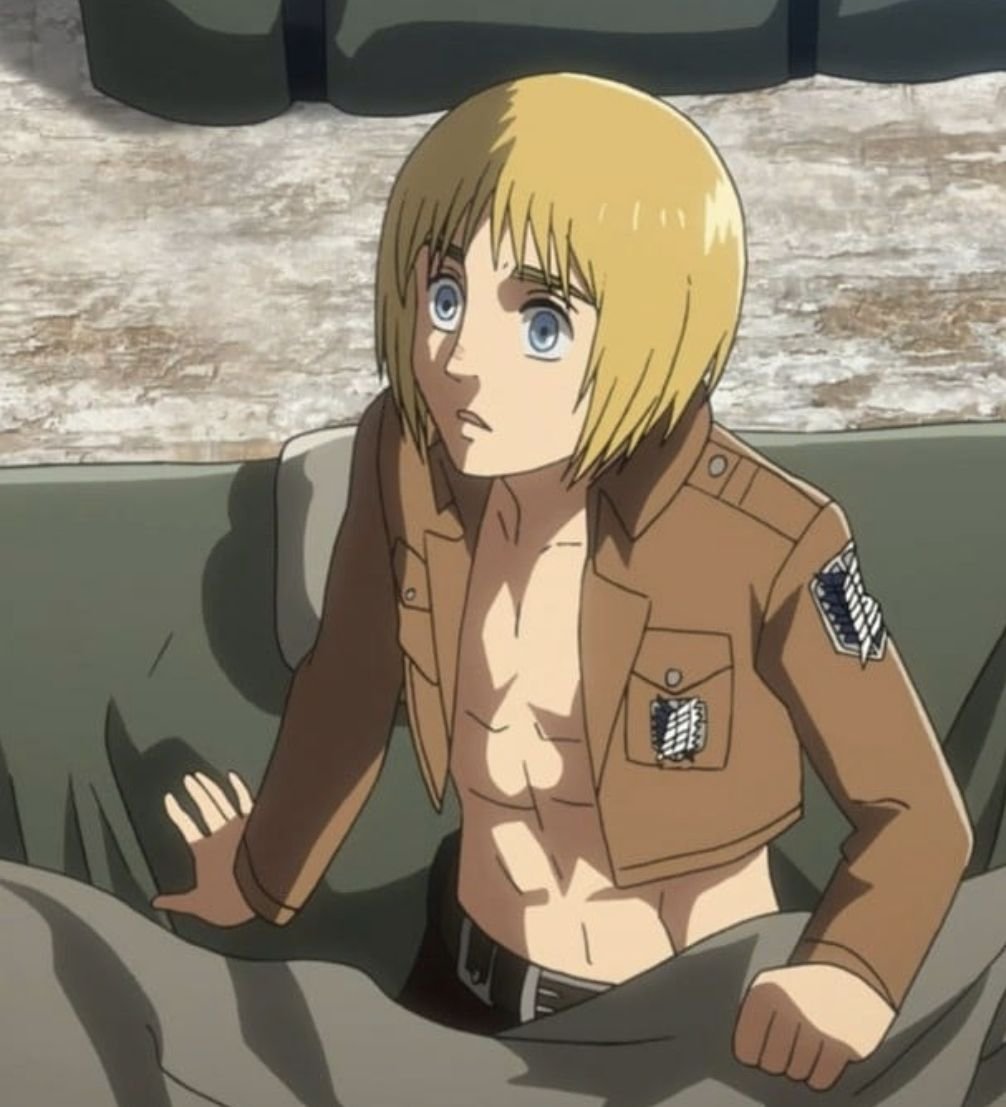
The internet is a vast and wonderful place, often sparking fascinating discussions and sometimes, a little confusion. One such query that frequently surfaces online is "Armin Arlert in Dragon Ball Super explained." It's a question that piques curiosity, blending two wildly popular anime franchises: the grim, strategic world of Attack on Titan with the high-octane, universe-shattering battles of Dragon Ball Super. However, let's set the record straight right from the start: Armin Arlert, the brilliant strategist from Attack on Titan, has never appeared in Dragon Ball Super.
This Super Pillar hub is dedicated to unequivocally clarifying this misconception, providing context for both series, and exploring why such an idea might have taken root. We'll dive into the distinct universes of these legendary anime, highlight the unique journeys of their characters, and confirm the absolute lack of any official crossover. If you've ever wondered about this topic, or simply want to understand the truth behind the online buzz, you've come to the right place.
Unpacking Armin Arlert: A Strategist Born of Titans
To truly understand why Armin's presence in Dragon Ball Super is a myth, we must first appreciate who Armin Arlert truly is within his own universe. Born in the Shiganshina District in the year 834, Armin was a physically frail boy whose insatiable curiosity for the world beyond the Walls, fueled by his grandfather's illegal book, set him apart. This intellectual drive, combined with the unwavering friendship of Eren Yeager and Mikasa Ackerman, forged a character defined not by brute strength, but by unparalleled strategic genius and an enduring hope for peace.
Armin's journey through Attack on Titan is one of profound transformation. From orchestrating the successful reclamation of the supply depot during the Battle of Trost District to identifying Annie Leonhart as the Female Titan and accurately theorizing about the nature of the Walls, his intellect consistently proved humanity's most valuable asset. His path culminates in inheriting the Colossal Titan and later becoming a pivotal ambassador for peace. To grasp the full depth of his character and why his narrative is so uniquely tied to his world, you might want to .
Dragon Ball Super's Expansive Universe: A Saga of Gods and Warriors
On the other side of this discussion lies Dragon Ball Super, a universe brimming with Saiyans, Gods of Destruction, Angels, and multi-versal tournaments. Following the events of Dragon Ball Z, DBS catapulted its beloved characters—Goku, Vegeta, Gohan, and Piccolo, among others—into cosmic adventures, introducing new transformations, formidable foes like Beerus and Jiren, and a complex hierarchy of divine beings. The series' core revolves around pushing boundaries of power, protecting Earth and the various universes, and exploring themes of martial arts mastery and indomitable spirit.
The visual style, power scaling, and narrative themes of Dragon Ball Super are fundamentally different from the gritty, war-torn reality of Attack on Titan. Characters routinely destroy planets, move at speeds beyond comprehension, and wield energy blasts capable of leveling entire landscapes. The very essence of what makes a character powerful, the nature of conflict, and the scale of the world are entirely distinct. For a foundational understanding of this iconic series, . This will quickly illustrate why a character like Armin, without access to ki or Saiyan physiology, wouldn't fit.
The Genesis of a Misconception: Why Do People Ask?
So, if there's no official crossover, why does the question "Armin Arlert in Dragon Ball Super explained" persist? Several factors likely contribute to this unique internet phenomenon. In the age of widespread fan art, elaborate fan fiction, and viral memes, the lines between canonical content and creative speculation can sometimes blur. Enthusiastic fans often imagine "what if" scenarios, bringing characters from different franchises together in exciting new ways. While these creations are a testament to fandom's creativity, they can occasionally be mistaken for actual, official content.
Additionally, certain character archetypes or visual cues might, to a casual observer, bear a fleeting resemblance across series, even if their foundational elements are entirely different. This human tendency to draw connections, coupled with the rapid spread of information online, can quickly give rise to seemingly plausible but ultimately unfounded theories. To understand more about how these ideas gain traction, you can .
Setting the Record Straight: No Official Crossover Here
The most definitive explanation for Armin Arlert's non-existence in Dragon Ball Super is simple: there has never been any official crossover material, announcement, or narrative development linking the two franchises. Attack on Titan, created by Hajime Isayama, and Dragon Ball Super, spearheaded by Akira Toriyama and Toyotarou, are produced by entirely separate animation studios (MAPPA/Wit Studio for AoT, Toei Animation for DBS) and published by different entities (Kodansha for AoT, Shueisha for DBS). These are two distinct creative properties, each with its own rich lore, character roster, and storytelling objectives.
Neither Hajime Isayama nor Akira Toriyama (or Toyotarou for Super) has ever indicated any intention of merging these universes. The creative integrity of both series relies on their self-contained narratives and unique worlds. The lack of any mention in official guides, interviews, or any form of canonical media further cements this fact. For a comprehensive look at the concrete evidence, consider .
Navigating Fan Content's Influence
It's important to acknowledge the role of fan-generated content in shaping perceptions. When you search for "Armin Arlert Dragon Ball Super," you might encounter impressive fan art depicting Armin in a Saiyan outfit or alongside Goku. While these pieces are often created with skill and affection, they are purely imaginative works. They reflect the boundless creativity of fans, not the official direction of the creators. Understanding this distinction is crucial for navigating the vast ocean of online content.
The vibrant fan community continuously produces amazing content, but it's essential to critically evaluate sources when seeking factual information about official anime lore. The excitement around a potential crossover is understandable, but ultimately, fan speculation remains separate from canon. To delve deeper into how fan creations influence audience beliefs, you might want to .
Why No Crossover Makes Sense
From a narrative perspective, integrating Armin into Dragon Ball Super would present insurmountable challenges. His character development, strategic prowess, and even his very existence are deeply rooted in the themes and struggles of Attack on Titan. Transplanting him into a world where power levels dictate status and conflicts are resolved with energy blasts would strip away what makes him unique. Conversely, introducing Saiyans or Gods of Destruction into the grim, realistic world of Attack on Titan would fundamentally break its established rules and tone. Both series thrive precisely because of their distinct identities and internal consistencies.
Beyond the Misconception: Celebrating Both Worlds
While Armin Arlert is not in Dragon Ball Super, and Dragon Ball Super characters aren't in Attack on Titan, both series offer incredibly rich and rewarding experiences for fans. They stand as testaments to the power of animation and storytelling, each carving its own legendary place in popular culture. Rather than seeking a non-existent crossover, we encourage you to celebrate the unique brilliance of both.
Perhaps some users might confuse characters with similar intellectual or strategic roles, or even look-alike designs in other media. If you're thinking of characters in Dragon Ball Super who exhibit strategic thinking or have a distinct intellectual edge, or perhaps even a similar aesthetic, it could be interesting to . This exploration helps further solidify the unique identity of Armin and the characters within DBS.
In the end, understanding the actual canon of both Attack on Titan and Dragon Ball Super allows us to appreciate their individual artistry. So, the next time you see "Armin Arlert in Dragon Ball Super explained," you'll be equipped with the knowledge to clarify that while it's an intriguing thought experiment, it remains purely within the realm of imagination, not official narrative. The worlds of Titans and Dragon Balls continue to evolve independently, each offering its own brand of epic storytelling to millions of dedicated fans worldwide.